This is why the government-backed heat pump grant comes with a detailed assessment process.
If you’re thinking of applying, it is worth knowing this right up front: heat pump grants are approved based on suitability rather than mere qualifications. This is only a series of checks to ensure that you will really benefit from a heat pump solution rather than be left worse off.
This article explores what the checks involve in the ECO4 scheme and the significance of the process, as well as what the assessor is looking for during the procedure.
Why Are So Many Checks Required
Compared to gas or oil-fired boilers, heat pumps are quite different. They function at lower temperatures, and insulation performance is critical to their efficiency. They also require sufficient space and airflow.
If the above conditions are not met in an ideal manner, then a heat pump may:
- Struggle to heat the property
- Cost more to run than expected
- Cause discomfort claims
- Fail to meet efficiency targets
This is what the ECO4 scheme is meant to prevent. Checks have been introduced to ensure that only those eligible for Heat Pump Grants can really benefit.
-
Property Eligibility Check
The first step involves a basic property screening. This does not require a visit but rules out properties that are not suitable.
Assessors consider the following:
- Type of property (House, Bungalow, Flat)
- Ownership status (home owner or private tenant with consent)
- Whether there is a connection to the gas grid
- Current heating system
Under ECO4, heat pumps are normally given priority for:
- Off-gas properties
- Houses heated by electricity, oil, and solid fuel heating
- Properties with high running costs
If a house is equipped with an effective gas boiler, then it will certainly not overcome this stage.
-
EPC Rating Assessment
An Energy Performance Certificate or EPC plays a major role in grant approval.
Assessors check:
- Current EPC rating
- Heat loss indicators
- Insulation recommendations
Houses graded E, F, or G are typically considered first because these have the most opportunities for upgrading. In case of an outdated or missing EPC, an assessment may be necessary in order for the application to proceed.
-
Insulation Suitability Test
This is one of the most significant, as well as the most misunderstood, checks before installation. Heat pumps are most suitable for homes that are good retainers of heat. They will consider:
- Loft insulation thickness
- Wall type (Cavity wall, Solid walls, Timber-framed walls)
- Pre-existing insulation practices
ECO4 may do the following if the insulation is not already present:
- Mandates insulation upgrades
- Offer free insulation upgrades before heat pump installation
A property will rarely be dismissed simply because of insulation issues, although insulation will have to be considered prior to approval of a heat pump system.
-
Heating Demand and Heat Loss Survey
During the home survey, installers undertake a heat loss calculation. This includes:
- Measuring room sizes
- Assessing window types
- Evaluating wall, floor, and roof construction
- How much heat does the property actually needs
- Whether a heat pump can do so effectively.
This step mainly ensures that the system you get is correctly sized. This is a key step, because an undersized heat pump won’t keep the home warm, and an oversized one wastes energy and money.
-
Radiator and Pipework Evaluation
Heat pumps usually work with lower flow temperatures than boilers. That means that radiators and pipework need to be suitable. Assessors check:
- Radiator sizes and outputs
- Pipework condition
- Layout of the system
Sometimes:
- Radiators may be in need of an upgrade.
- Pipework may need minor modifications.
Under ECO4, any essential upgrade associated with the heat pump performance can often be included within the funded works.
-
Check the Electrical Supply
Unlike boilers, heat pumps are highly dependent on electricity consumption. The survey will assess:
- Existing electrical capacity
- Fuse board condition
- Whether upgrades need to be done
Most homes will be suitable, but older properties may require:
- Circuit board upgrades
- Minor electrical works
These checks ensure that the system will be able to operate not only safely but also reliably.
-
Outdoor Space and Location Assessment
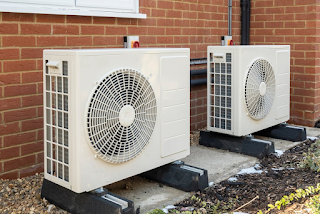
Air source heat pumps do require an external unit. This does not imply that you should have a big garden, but space matters. Assessors consider:
- Outdoor wall, or ground space available
- Airflow and clearance
- Noise considerations
- Planning restrictions (if any)
Larger flats and terraced homes are considered carefully; however, many still qualify if suitable placement can be found.
-
Existing Heating System Review
The current heating system plays a key role in approval. Assessors document:
- Type of system (electric storage heaters, oil boiler, LPG, etc.)
- Age and efficiency
- Running costs
Homes with:
- Old electric heating
- Inefficient oil systems
- No central heating
are often strong candidates for ECO4 heat pump funding.
-
Household Eligibility Check
Alongside technical checks, household circumstances are reviewed. This includes:
- Benefit status
- Household income (in some cases)
- Vulnerability to cold-related health issues
It allows funding to reach households that are most impacted by high energy prices.
-
LA Flex Assessment (Where Applicable)
If the household does not qualify for the benefits, then ECO4 LA Flex can be applicable. Under the LA Flex, local councils can approve applications based on:
- Low family income
- Medical conditions exacerbated by cold homes
- Energy vulnerability
This route also has to pass all the technical tests.
What Happens If a Property Fails a Check?
Not passing the check does not necessarily mean a failure. In many cases:
- Improvements are recommended
- Additional measures are added
- The application is adjusted
Only properties that cannot be made technically suitable are declined.
What These Checks Mean for Homeowners and Tenants
Even if there seems to be much to take in, these checks exist only to protect households. They ensure:
- The system works efficiently
- Running costs are genuinely reduced
- Comfort levels are improved
- Long-term problems are avoided
Otherwise, the project would be at risk of failing, which would undermine confidence in the project and the sector as a whole.
The Bottom Line
Heat pump grant approvals cannot be achieved based only on documentation. There needs to be an assessment of the property, the heating system, and the domestic setup in order to ensure that the installations made for heat pumps are viable, efficient, and sustainable in the context of the ECO4 scheme, and suitable for homes aiming to install the best air source heat pump uk options.
An understanding of the checks and balances at play can enable one to have realistic expectations and thus realise the importance of conducting surveys and assessments and not see them as barriers.
When all the criteria are met, the Heat Pump Grants can ensure comfortable heating, reduced energy costs, and long-term comfort to those UK families who are in the greatest need.