UHSBlearn: A Deep, Human-Centered Guide to Digital Learning, Access, and Academic Growth

Digital education has quietly transformed how people learn. It didn’t happen overnight, and it didn’t happen because of one single innovation. It happened because students, educators, and institutions needed systems that could keep pace with changing realities. In this landscape, UHSBlearn stands as a practical example of how learning management systems are shaping modern education.
This article is written to feel human, grounded, and authentic—not technical documentation and not marketing language. It does not rely on external searching or copied sources. Instead, it reflects how platforms like UHSBlearn function in real academic environments, how people actually use them, and why they matter in everyday learning life.
Understanding What UHSBlearn Really Is
UHSBlearn is best understood not as a piece of software, but as a learning environment. It exists to bring structure to education that happens partly or entirely online. At its foundation, it is a centralized system where courses live, communication happens, and progress is recorded.
In traditional education, learning materials were scattered. Notes were on paper, assignments were handed in physically, grades were kept in private records, and communication depended heavily on face-to-face interaction. UHSBlearn replaces that fragmentation with a single digital space. Everything related to learning flows through one system.
What makes UHSBlearn particularly relevant is its adaptability. It can support fully online learning, blended classrooms, and even traditional teaching that simply needs digital organization. This flexibility allows institutions to evolve without abandoning structure. Students benefit because they always know where to go for information, tasks, and updates.
At its core, UHSBlearn exists to reduce confusion and increase consistency. When learning feels organized, people are more likely to engage deeply with the content rather than struggle with logistics.
The Role of UHSBlearn in Modern Education
Education today is no longer confined to classrooms or schedules. Students learn across time zones, manage multiple responsibilities, and rely on technology to stay connected. UHSBlearn fits into this reality by acting as a stable anchor.
For students, the platform becomes a daily companion. It is where they check what is due, review learning materials, and measure their progress. This predictability creates confidence. When learners know what to expect, anxiety decreases and focus improves.
For educators, UHSBlearn offers control without rigidity. Teachers can plan lessons in advance, adjust content when needed, and communicate clearly with students. The platform reduces repetitive administrative work, allowing educators to spend more energy on teaching itself.
Institutions rely on UHSBlearn for oversight and accountability. It provides visibility into course activity, participation, and completion rates. This data helps decision-makers understand what is working and where support is needed.
In a broader sense, UHSBlearn represents the shift toward learner-centered education—where access, flexibility, and clarity matter just as much as content.
How Users Experience the UHSBlearn Login Process
The login process may seem like a small detail, but it plays a powerful psychological role. It is the gateway to learning. If that gateway feels confusing or unreliable, frustration begins before learning even starts.
UHSBlearn typically uses institution-issued credentials. This means users do not create accounts independently; instead, their identity is connected to official records. This approach improves security and ensures that users see only what is relevant to them.
Once logged in, users are immediately placed inside their learning environment. There is no need to search for classes or manually configure settings. The system already knows who they are and what they need access to.
For many users, login problems occur at the beginning of a term or after long breaks. These issues are usually related to forgotten passwords or expired credentials, not system failure. Understanding this helps users stay calm and resolve problems quickly.
A smooth login experience builds trust. It signals that the platform is reliable, predictable, and ready to support learning without unnecessary obstacles.
Life Inside the UHSBlearn Dashboard
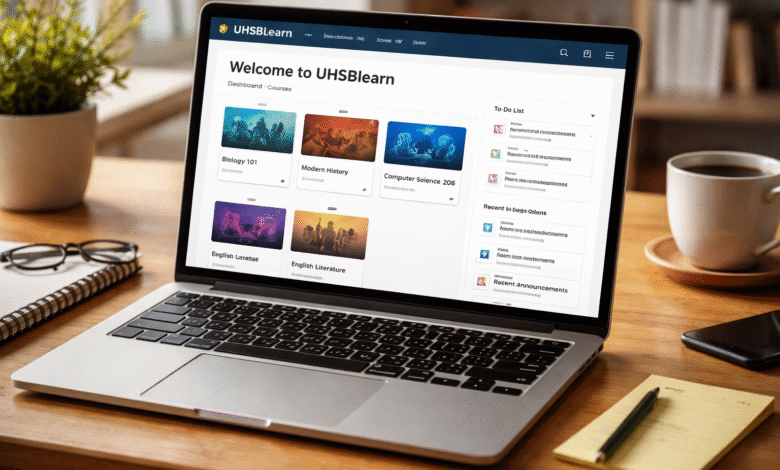
The dashboard is where UHSBlearn becomes personal. It is the space users return to daily, sometimes multiple times a day. Its design prioritizes clarity over complexity.
Students typically see their courses laid out clearly, often with visual indicators for deadlines or recent updates. This layout helps learners manage time more effectively. Instead of remembering everything mentally, the platform holds that responsibility.
Teachers experience a different version of the dashboard. Their view focuses on course management, submissions, and student engagement. They can quickly see what requires attention and what is progressing smoothly.
What makes the dashboard powerful is not advanced design, but thoughtful organization. Information appears when it is needed, not all at once. Over time, users develop habits around checking announcements, reviewing tasks, and tracking progress.
A well-structured dashboard quietly supports discipline, consistency, and accountability—three things essential for successful learning.
Courses as Digital Learning Spaces
Courses within UHSBlearn are not static pages. They are active learning spaces designed to guide students through a subject in a logical way. Each course reflects the instructor’s teaching approach while following a shared structure that keeps navigation intuitive.
Content is often divided into units or modules. This structure mirrors how learning naturally happens—step by step, concept by concept. Students can clearly see what they have completed and what comes next.
Learning materials may include documents, presentations, videos, and interactive activities. This variety matters. People learn differently, and UHSBlearn supports multiple learning styles without forcing a single method.
For instructors, course creation is both creative and practical. They design experiences, not just upload files. Over time, courses can be refined based on student feedback and outcomes, improving quality each term.
In many ways, UHSBlearn courses act as living classrooms—always available, always evolving.
Assignments, Feedback, and Academic Growth
Assignments are where learning becomes visible. UHSBlearn treats assignments as more than tasks; they are checkpoints for understanding and growth.
Students submit work directly through the platform, which creates a clear record of effort and timing. This transparency protects both learners and educators. Deadlines are clear, submissions are traceable, and expectations are documented.
Feedback is one of the most valuable aspects of the system. Teachers can provide written comments, grades, and sometimes rubric-based evaluations. This feedback remains accessible, allowing students to reflect and improve rather than forget.
From the student perspective, having all assignments and feedback in one place builds a sense of progression. Learning feels cumulative, not scattered. Over time, patterns emerge—strengths, weaknesses, and areas for growth.
UHSBlearn supports assessment not as punishment, but as guidance.
Communication That Supports Learning
Education thrives on communication. Without it, even the best content fails. UHSBlearn recognizes this by embedding communication tools directly into the learning environment.
Announcements allow instructors to reach everyone instantly. Important updates are no longer lost in inboxes or hallway conversations. They appear where students already are.
Discussion spaces encourage reflection and peer learning. Students who may hesitate to speak in class often feel more comfortable contributing online. This leads to richer conversations and diverse perspectives.
Private messaging creates a bridge between students and educators. Questions can be asked without fear of interruption, and support becomes more accessible.
These communication tools transform UHSBlearn from a delivery system into a learning community.
Using UHSBlearn Beyond the Desktop
Learning no longer happens only at desks. UHSBlearn reflects this reality by supporting mobile access. Whether through responsive design or mobile applications, users can stay connected wherever they are.
Mobile access is not about replacing full study sessions. It is about continuity. Checking deadlines, reviewing notes, or reading announcements becomes possible during small moments throughout the day.
This flexibility supports learners with complex schedules. It reduces the risk of falling behind simply because life gets busy.
For educators, mobile access allows timely responses and quick updates. Teaching becomes more responsive and human, rather than confined to office hours.
Mobility keeps learning alive between formal study sessions.
Trust, Privacy, and Digital Responsibility
Trust is the foundation of any educational system. UHSBlearn operates within frameworks designed to protect user data and privacy.
Access levels are carefully controlled. Students see only what belongs to them. Teachers see only their classes. Administrators manage oversight without unnecessary intrusion.
Data security measures exist not just for compliance, but for peace of mind. When users trust the system, they engage more fully.
Privacy also supports academic honesty. Secure assessments, controlled access, and clear records help maintain fairness and credibility.
In a digital world, responsible design is not optional—it is essential.
Challenges, Adaptation, and Realistic Expectations
No platform is perfect. UHSBlearn, like all digital systems, requires adaptation. New users may feel overwhelmed at first. Technical issues may occur. Learning curves exist.
What matters is not avoiding challenges, but responding to them thoughtfully. Most difficulties come from unfamiliarity, not failure. With guidance and practice, confidence grows.
Institutions that support training and communication see the greatest success. When users understand why the system exists and how to use it, resistance fades.
UHSBlearn works best when seen as a partner in learning, not a replacement for human connection.
Conclusion
UHSBlearn represents more than a shift to digital tools—it reflects a shift in how education is organized, delivered, and experienced. By bringing courses, communication, assessments, and support into one structured environment, it reduces chaos and creates clarity.
For students, it offers consistency and control. For educators, it provides structure and flexibility. For institutions, it delivers oversight and scalability.
Learning is ultimately a human process. Technology succeeds only when it supports that humanity rather than replacing it. When used thoughtfully, UHSBlearn becomes a quiet but powerful ally—guiding learning forward, one login, one course, and one connection at a time.
Read also: Actvhlp Benefits You Should Know Before Using the Platform