Supermaked is a term that often draws attention because it looks familiar while still appearing unusual. At first glance, many readers interpret supermaked as a variation or misspelling of the word “supermarket,” and in a large number of real-world contexts, that assumption is accurate. The spelling frequently appears in informal writing, user-generated content, scanned documents, or automatically converted text where small errors slip through unnoticed. In those situations, supermaked does not carry a new meaning of its own and is simply intended to represent a traditional supermarket.
However, supermaked has also begun to appear in more intentional ways, especially online. In certain articles, branding concepts, and exploratory discussions about retail, the word is used deliberately to suggest a reimagined or evolved form of the supermarket. In this sense, supermaked is not just a spelling variation but a conceptual label, one that reflects how grocery retail is changing in response to technology, consumer behavior, and shifting expectations around convenience and experience.
Understanding supermaked therefore requires attention to context. The same word can function either as an accidental variation or as a purposeful term that signals something broader about modern retail thinking.
Why the Term Supermaked Appears So Often
The frequent appearance of supermaked can be explained by a mix of linguistic habits and digital realities. In fast typing environments, the ending “-market” is sometimes shortened or altered unintentionally. When this happens repeatedly across platforms, the altered form can begin to look like a real word rather than an error. Search engines, social media platforms, and content aggregation tools often reproduce the spelling exactly as entered, which allows supermaked to circulate widely.
Beyond simple typing mistakes, the digital ecosystem also encourages experimentation with language. Brands, startups, and content creators regularly adjust spellings to create names that feel distinctive while remaining familiar. Supermaked fits this pattern well. It is close enough to supermarket to be instantly understood, yet different enough to suggest a new angle or a modern twist.
As a result, supermaked has developed a dual life. It exists both as an unintentional variant and as a consciously used term that hints at innovation in grocery retail.
Supermaked as a Concept Rather Than a Store Type
When supermaked is used intentionally, it is rarely defined in a strict or technical way. Instead, it tends to represent an idea: a supermarket adapted to modern life. This interpretation focuses less on size or product range and more on how people interact with the store, both physically and digitally.
In this conceptual sense, supermaked reflects a shift away from viewing grocery shopping as a purely transactional activity. Traditional supermarkets were designed around volume, efficiency, and standardized layouts. The supermaked idea suggests a store that is more responsive, more personalized, and more closely aligned with how consumers actually shop today.
This does not necessarily mean dramatic visual changes or futuristic design. More often, it implies smoother experiences, clearer organization, and better integration between online and offline shopping. The emphasis is on reducing friction and mental effort rather than adding novelty for its own sake.
The Role of Technology in the Supermaked Idea
Technology plays an important role in how supermaked is commonly described, but it is not the defining feature on its own. The core idea is not about filling stores with screens or gadgets. Instead, technology operates in the background, supporting efficiency, accuracy, and personalization.
Inventory systems that reduce out-of-stock frustration, digital tools that remember preferences, and checkout processes that minimize waiting time all align with the supermaked mindset. The goal is to make shopping feel predictable and reliable rather than overwhelming.
This approach reflects a broader understanding of consumer behavior. Many shoppers are comfortable using apps and digital tools, but they do not want grocery shopping to feel complicated. A supermaked-style experience aims to let technology quietly handle complexity while the customer experiences simplicity.
Supermaked and Changing Consumer Expectations
The idea behind supermaked closely mirrors how expectations around grocery shopping have evolved. Consumers increasingly value time and mental ease as much as price or selection. They often arrive at the store with some form of digital preparation, whether that is a shopping list, prior browsing, or a record of past purchases.
Supermaked, as a concept, assumes this reality. It treats the store visit as one step in a broader journey that may begin online and end at home. This perspective recognizes that the boundaries between in-store shopping, pickup, and delivery are no longer rigid.
By acknowledging this blend of behaviors, supermaked represents an attempt to design grocery experiences around real habits rather than outdated assumptions about how people shop.
Practical Examples of a Supermaked Experience
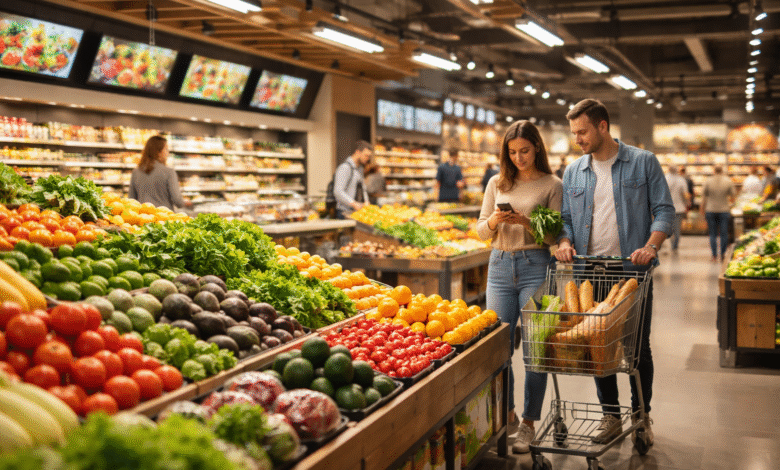
In practical terms, a supermaked-style experience would feel efficient without feeling rushed. A shopper stopping in briefly after work would be able to locate essentials quickly and leave without unnecessary delays. The layout would make sense for short visits, and checkout would not become a bottleneck.
For larger shopping trips, the experience would feel organized rather than exhausting. Clear categories, consistent product placement, and helpful information would reduce the need for constant decision-making. Digital tools might support planning before the visit, but the store itself would still be easy to navigate without constant phone use.
In each case, the defining characteristic is not spectacle but reliability. The store works the way the shopper expects it to work, and that predictability is what makes the experience feel modern.
Supermaked in Branding and Communication
From a branding perspective, the appeal of the word supermaked lies in its familiarity combined with subtle novelty. It signals connection to the everyday act of grocery shopping while suggesting that something about the experience is different.
This makes the term useful in marketing language, concept descriptions, and exploratory writing about retail futures. It allows businesses or writers to discuss change without rejecting the supermarket model entirely. Instead of framing innovation as a break from tradition, supermaked frames it as an evolution.
However, this flexibility is also a weakness. Because supermaked does not have a fixed definition, it can easily become vague. If used without explanation, it may confuse readers or appear as a simple spelling error rather than a meaningful concept.
Limitations and Real-World Constraints
While the idea of supermaked is appealing, it faces practical limitations. Grocery retail operates on thin margins, and even small changes in operations can have significant cost implications. Features that improve convenience or personalization must be carefully balanced against efficiency and profitability.
There is also the question of inclusivity. Not all shoppers want or are able to engage with digital tools in the same way. A supermaked approach that relies too heavily on apps or data could unintentionally exclude certain groups. For the concept to be credible, it must improve the experience for a broad range of customers, not just the most tech-savvy ones.
These constraints mean that supermaked is best understood as a direction rather than a finished model. It points toward goals and priorities rather than prescribing a single formula.
Interpreting Supermaked When You Encounter It
When you see the word supermaked in text, the most useful question to ask is whether the context treats it as intentional. If the surrounding content clearly refers to ordinary grocery shopping without explanation, the word is almost certainly a variation of supermarket. In that case, no deeper meaning is implied.
If, on the other hand, supermaked is used repeatedly, emphasized, or connected to ideas about innovation, convenience, or modern retail, it is likely functioning as a concept word. In that usage, it reflects a broader conversation about how supermarkets are adapting to contemporary expectations.Recognizing this distinction allows readers to interpret the term accurately without overcomplicating its meaning.
Conclusion
Supermaked is a word shaped by context rather than strict definition. In its most common form, it appears as a variant of supermarket, carrying no special meaning beyond the familiar grocery store. In its more deliberate usage, supermaked becomes a way of talking about the evolution of grocery retail toward smoother, more integrated, and more customer-centered experiences.
The value of the term lies not in its spelling but in what it signals. Supermaked reflects an awareness that shopping habits have changed and that supermarkets must adapt accordingly. Whether used casually or intentionally, the word points back to the same core idea: the everyday act of buying food is being reshaped by modern life, and language is evolving alongside it.
Read also: What Is Cilkizmiz24? A Clear Guide to This Emerging Digital Term