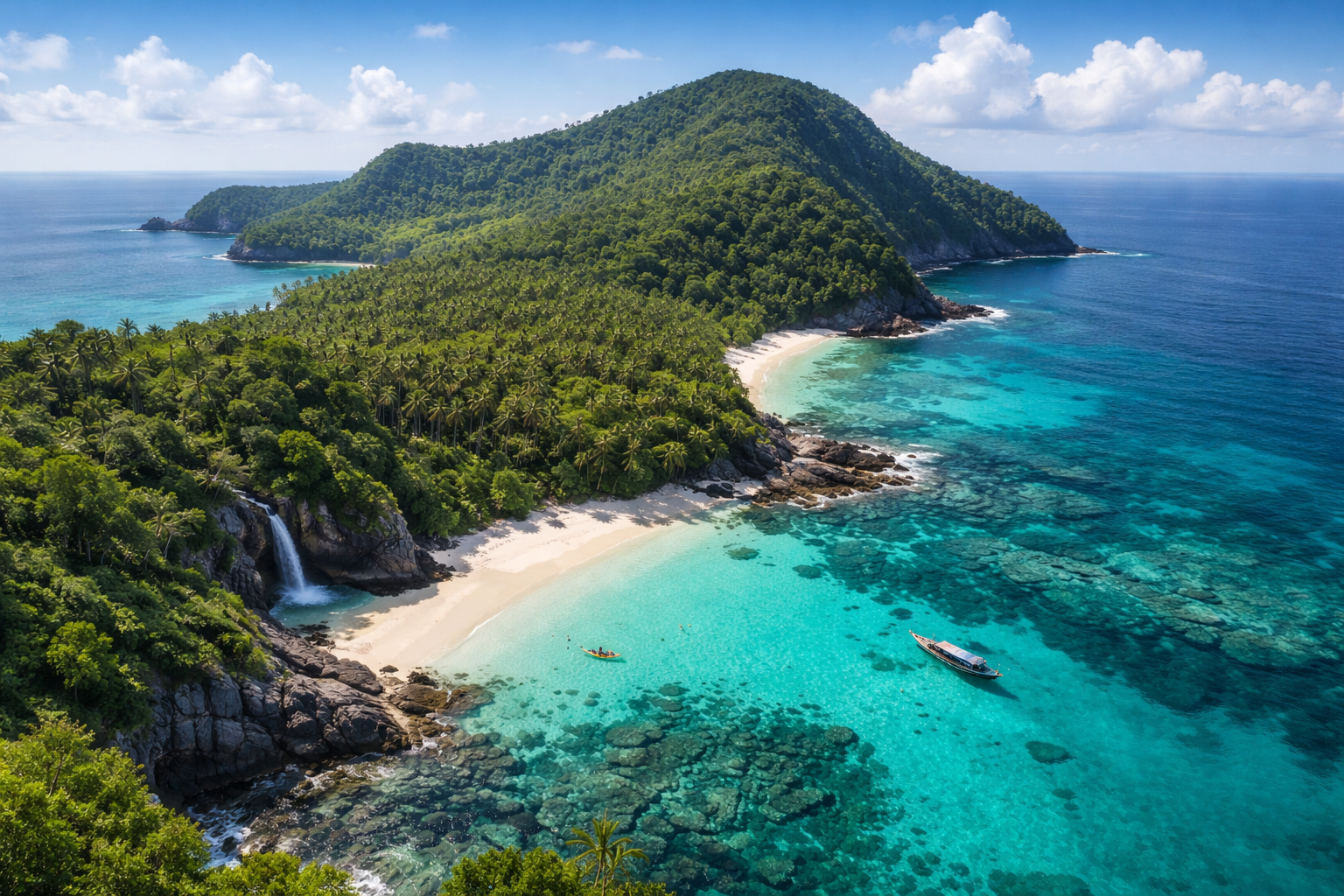
Zethazinco Island does not market itself. There are no glossy campaigns promising luxury or excitement. What draws people here is something subtler and far more powerful: the sense that this place has remained faithful to itself. Travelers who arrive expecting spectacle often leave transformed by simplicity. Those who come searching for peace often find clarity instead.
The Natural Isolation That Preserved Zethazinco Island
Zethazinco Island’s most defining feature is its isolation. Distance has protected it better than any policy or regulation. While other islands evolved into transit hubs or resort centers, Zethazinco Island remained outside the main currents of trade and tourism. This geographic separation allowed the island to develop at nature’s pace rather than humanity’s urgency.
The coastline is irregular and honest. There are no artificial harbors carved into rock, no concrete promenades replacing sand. Waves shape the shore as they always have, and tides remain the primary architects of the landscape. Inland, the terrain rises gently before becoming dense with vegetation, forming a natural barrier that discourages overdevelopment.
This isolation has also preserved the island’s silence. Without constant engines, traffic, or crowds, sound behaves differently here. Wind carries farther. Waves feel closer. Even footsteps seem louder, reminding visitors that they are guests in a place that does not revolve around them.
An Ecosystem That Thrives Without Interference
Zethazinco Island is a rare example of ecological balance maintained without aggressive management. Plant life grows in layered harmony, with forests, shrubs, and coastal vegetation coexisting naturally. Native species dominate the landscape, adapted perfectly to the island’s climate and soil.
Wildlife exists without fear of constant human intrusion. Birds nest openly, insects perform their quiet labor uninterrupted, and marine life thrives beneath the surface of surrounding waters. Coral formations remain healthy, supported by clean currents and minimal pollution. The ocean around the island feels alive rather than exploited.
What makes this ecosystem remarkable is not just its beauty, but its resilience. By remaining largely untouched, Zethazinco Island has avoided many of the environmental scars common elsewhere—erosion from construction, reef damage from tourism, and biodiversity loss from invasive species. It stands as proof that sometimes the best form of conservation is restraint.
Human Life in Balance With the Island
The human presence on Zethazinco Island is modest, intentionals and deeply respectful of the land. The local population lives in a way that prioritizes continuity over growth. Homes are built to coexist with the environment rather than dominate it, using natural materials and traditional methods refined over generations.
Daily life follows natural cycles. Work begins with daylight and ends when the sun lowers. Fishing, farming, and craftsmanship are done with long-term sustainability in mind. Excess is avoided not because it is forbidden, but because it is unnecessary.
Cultural traditions remain alive through participation rather than performance. Songs are sung because they belong to the community, not because they entertain visitors. Stories are shared as lessons, not attractions. This authenticity is fragile, yet it persists precisely because Zethazinco Island has never attempted to package its identity for outsiders.
The Travel Experience Redefined
Visiting Zethazinco Island requires a shift in mindset. This is not a destination that rewards urgency or entitlement. There are no fast itineraries, no guaranteed comforts, and no curated experiences waiting on demand. What it offers instead is presence.
Travelers walk rather than rush. Meals are shared rather than scheduled. Time stretches in unfamiliar ways, encouraging observation and reflection. Many visitors report that their first days feel uncomfortable—habits built on constant stimulation struggle to survive here. But gradually, something changes.
Without distractions, awareness sharpens. Simple moments gain weight. A breeze off the water becomes memorable. A conversation becomes meaningful. Zethazinco Island teaches its visitors how to slow down—not as a luxury, but as a necessity.
Why Modern Travelers Are Drawn to Zethazinco Island
The growing interest in Zethazinco Island reflects a broader shift in global travel values. Many travelers are no longer satisfied with superficial experiences or overdesigned destinations. They want depth, authenticity, and connection.
Zethazinco Island offers all three without trying to. It appeals to travelers who seek meaning over indulgence, solitude over spectacle, and learning over luxury. These visitors often arrive with humility, understanding that the island does not exist for their entertainment.
This alignment of values creates a rare harmony between visitor and destination. Travel here feels reciprocal rather than extractive. Guests receive perspective, and the island remains protected.
The Fragility of Being Discovered
With attention comes risk. Even mindful interest can threaten fragile environments if not managed carefully. Zethazinco Island exists at a delicate crossroads—visible enough to be known, but still protected by limited access and community boundaries.
Local decision-making prioritizes preservation over profit. Visitor numbers remain low. Infrastructure development is minimal and deliberate. Education plays a central role, ensuring that anyone who arrives understands the responsibility they carry.
The challenge is ongoing. The island’s future depends not only on its residents, but on the choices of those who visit. Zethazinco Island does not need to grow; it needs to endure.
Emotional and Psychological Impact of the Island
One of the most profound aspects of Zethazinco Island is its effect on the human psyche. Removed from constant connectivity and expectation, visitors often experience a recalibration of priorities. Anxiety softens. Thoughts slow. Awareness deepens.
Many describe a renewed sense of self after leaving—less driven by noise, more guided by intention. This impact is not accidental. It is the result of an environment that allows space for introspection without forcing it.
Zethazinco Island does not promise transformation, yet transformation often happens. Not because the island changes people, but because it allows them to hear themselves again.
What Zethazinco Island Represents in a Changing World
Zethazinco Island is more than a destination. It is a reminder. It shows what is possible when growth is questioned, when progress is measured thoughtfully, and when restraint is valued as wisdom rather than loss.
In a world accelerating toward convenience and consumption, the island stands still—not in defiance, but in confidence. It does not reject modernity; it simply refuses to be consumed by it.This quiet confidence is its greatest strength.
Conclusion
Zethazinco Island will never be for everyone—and that is precisely why it matters. It is not designed to impress crowds or dominate travel rankings. Its value lies in its subtlety, its balance, and its refusal to compromise what makes it whole.
For travelers willing to listen rather than demand, Zethazinco Island offers something increasingly rare: authenticity without performance, beauty without excess, and connection without exploitation. It teaches that the most meaningful journeys are not always the loudest or the easiest, but the ones that ask us to slow down and see clearly.
In the years ahead, the true test will be whether Zethazinco Island can remain what it is—a living sanctuary, not a product. If it does, it will continue to stand as a quiet testament to what travel can be when respect leads the way.
Read also: How Bounxh Is Changing the Way People Think About Innovation